
By Nate Rich, Senior Director, ITSM and Observability Management at Foulk Consulting
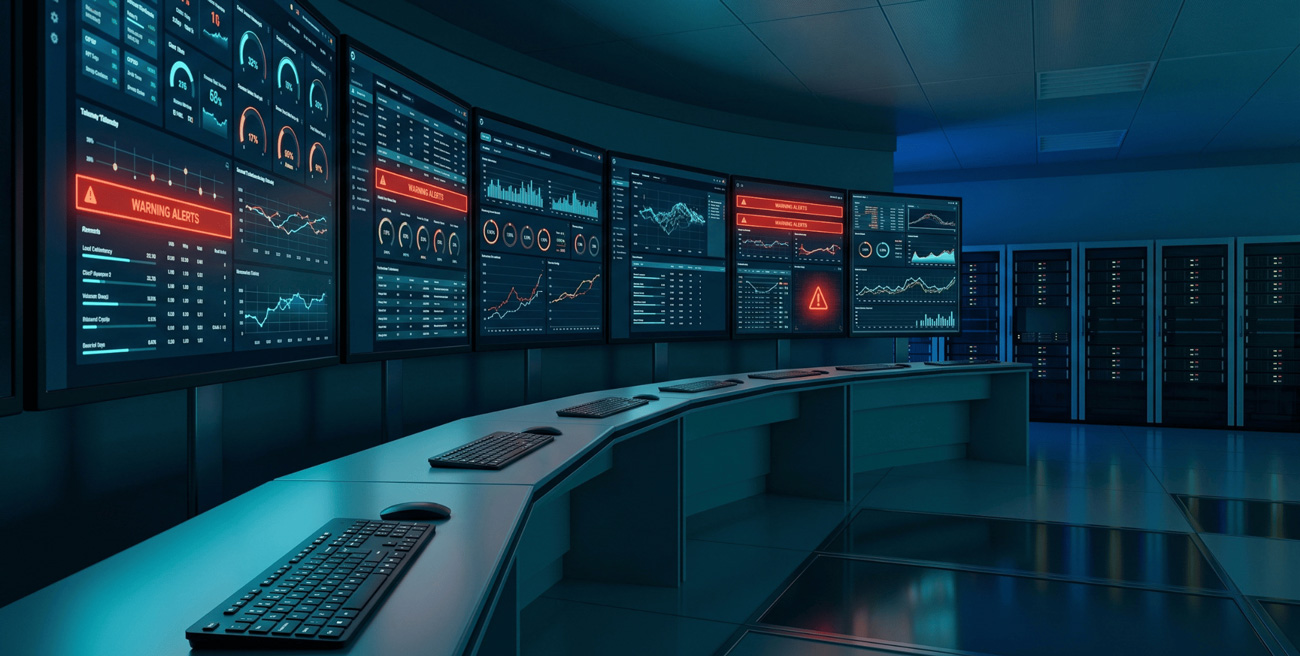
The business case was airtight. The architecture reviews were thorough. The executive leadership team approved a substantial investment in an enterprise-grade observability and monitoring platform. Agents were rolled out across environments, logs and metrics began funneling into centralized dashboards, and synthetic monitors started pulsing across critical user journeys.
Then, at 2:15 AM on a holiday weekend, a cascading failure took down the core transaction pipeline.
The monitoring platform did exactly what it was engineered to do: it generated dozens of alerts, updated health gauges from green to red, and captured millions of high-fidelity spans. Yet customer escalations still beat the engineering response by forty minutes. Triage calls were chaotic, finger-pointing between infrastructure and application teams stalled resolution, and Mean Time to Resolution (MTTR) looked virtually identical to where it sat before the multimillion-dollar rollout.
This scenario plays out across enterprise IT organizations every day. Organizations consistently confuse instrumentation with operational coverage. Procuring an advanced platform gives you visibility, but visibility alone never stopped an outage.
If no one with the right expertise is actively interpreting, triaging, and acting on the signal in real time, you haven’t bought resilience, you’ve simply purchased an expensive digital seismograph that records the earthquake while the building falls.
The Observability Capacity Gap
The modern observability ecosystem boasts extraordinary technological capabilities: automated topology discovery, distributed tracing, AI-driven anomaly detection, and unified telemetry streams. Yet the gap between technology capabilities and operational capacity has never been wider.
Three systemic bottlenecks routinely undermine modern monitoring initiatives:
1. Alert Triage and the Myth of Automated Correlation
No monitoring platform operates in a steady state of zero-touch triage right out of the box. Even sophisticated platforms require continuous baselining, alert threshold refinement, and context-mapping across application tiers.
Without aggressive tuning, platforms inundate teams with hundreds of notifications daily. Alert fatigue sets in rapidly, leading on-call staff to ignore early warning indicators until an entire dependency chain collapses. Someone must curate the noise, validate alerts against business impact, and connect individual metric spikes to customer-facing services.
2. High-Severity Investigations Demand Scarce Expertise
Modern distributed systems (microservices, hybrid cloud meshes, serverless runtimes, and legacy backend mainframes) do not fail in predictable ways. Interpreting a sudden spike in thread contention alongside a latency variance across container clusters is not entry-level work.
Diagnosing root cause across complex telemetry streams requires seasoned practitioners who understand both infrastructure topography and application architecture. Asking generalist service desk staff to parse distributed traces leads to delays; routing every amber alert to your principal architects leads to resignations.
3. The 24/7/365 Operational Reality
Enterprises run around the clock, and critical incidents have a documented affinity for 2:00 AM on Sunday mornings. Maintaining true continuous coverage requires an operational rotation of at least five to six dedicated engineers simply to keep eyes on consoles, handle incoming anomalies, and lead immediate triage.
For most enterprises, building and maintaining an internal 24/7 tier-2 and tier-3 observability desk is financially prohibitive, operationally distracting, and nearly impossible to staff given current technical talent shortages.
The Hidden Cost: Burnout and Engineering Stagnation
When organizations lack a dedicated operational structure to manage and monitor their tooling, they default to an unsustainable stopgap: pulling core engineering and DevOps talent into the operational line of fire.
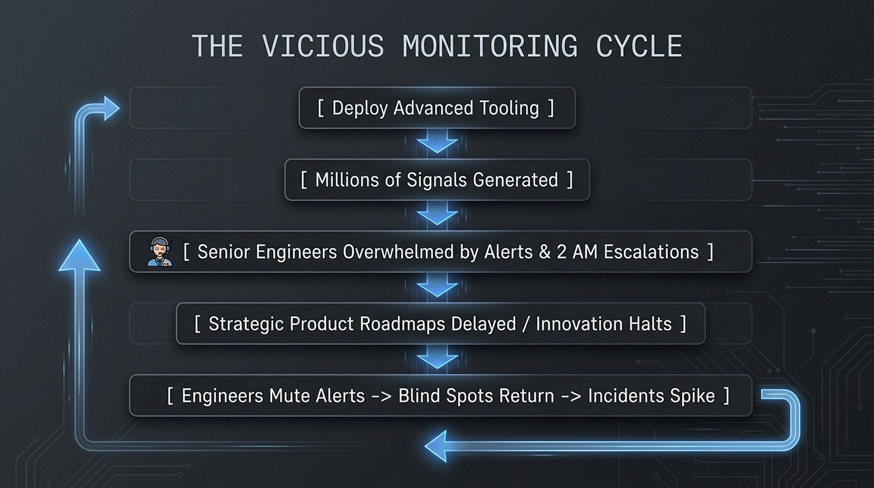
Senior software engineers, SREs, and cloud architects are hired to build resilient systems, accelerate feature delivery, and modernize legacy workloads. When their weeks are hijacked by false-positive alert investigations, disjointed war rooms, and on-call exhaustion, two things happen:
- Strategic Velocity Collapses: Business-critical innovation initiatives take a backseat to operational maintenance and fire-fighting.
- Turnover Surges: Your most skilled and expensive technical contributors burn out and walk out the door, taking vital institutional knowledge with them.
Bridging the Gap: Why Managed Observability Is the New Standard
Recognizing this dilemma, forward-thinking IT leaders are shifting their operating models. They are decoupling platform ownership from internal platform maintenance, leveraging managed services to bridge the capacity void.
Partnering with an experienced managed observability provider transforms raw technology into an active operational shield:
- Always-On Eyes and Immediate Triage: A dedicated managed service ensures seasoned analysts are watching telemetry 24/7/365. Incidents are identified, contextualized, and triaged within minutes of anomalous behavior—often before end users or synthetic checks detect a degradation.
- Continuous Hygiene and Noise Elimination: A monitoring platform is not a static appliance; it is a living ecosystem that evolves alongside your codebase. Managed partners handle ongoing threshold optimization, dashboard tailoring, health check adjustments, and synthetic script updates, systematically driving down false alarms.
- Deep ITSM Integration: Mature observability does not operate in an operational silo. Telemetry must tie seamlessly into IT Service Management (ITSM) workflows—auto-generating prioritized incidents, enriching tickets with precise trace IDs and log snippets, updating CMDB configuration items, and enforcing SLA/OLA accountability.
- Protection of Core Engineering Focus: By absorbing initial alert triage, verification, and runbook execution, managed services shield internal engineering teams from operational friction. Senior staff are pulled in only when specific, actionable code changes or high-level architecture decisions are required.
Maximizing the Value of Your Telemetry
Investing in leading observability technology is a necessary foundation for digital business. But a world-class platform paired with an overburdened, part-time monitoring approach guarantees sub-optimal returns and persistent operational vulnerability.
Resilience is not a product code you can purchase from a software vendor. It is the output of three pillars working in lockstep: comprehensive tooling, governed processes, and dedicated human expertise.
If your platform is running, but no one has the capacity to watch, analyze, and act upon the stories your data is telling, it’s time to rethink your operational model. True enterprise resilience begins when your telemetry is paired with the focused capacity needed to act on it.
Ready to Close the Gap?
Investing in an observability platform is only the first step toward true operational resilience. If your team is spending more time fighting alert fatigue and chasing 2:00 AM outages than driving innovation, Foulk Consulting can help.
Our managed ITSM and observability experts integrate seamlessly into your environment—delivering 24/7/365 triage, continuous platform hygiene, and proactive incident management so your engineers can get back to building.
Contact Foulk Consulting today to learn how we can help you maximize the value of your monitoring investment and secure your digital operations.

*** Nate Rich is a Senior Director of ITSM and Observability Management at Foulk Consulting, where he helps enterprises master performance engineering and full-stack observability.
